
 English
 Views: 0 Author: Site Editor Publish Time: 2025-11-10 Origin: Site


A clean production line is essential for consistent quality — yet dust and airborne particles often find ways to contaminate even the most controlled environments. A simple yet effective solution lies in dust-proof strip brushes, which act as barriers to block dust, debris, and static contaminants from entering sensitive areas. At Anhui Wanze Brush Industry Co., Ltd., we specialize in designing and manufacturing custom industrial brushes that enhance sealing performance and product reliability across a wide range of applications, from packaging to electronics. By integrating high-quality dust-proof strip brushes into your system, you can minimize contamination, extend equipment life, and maintain a higher standard of finished products.
The term “dust-proof” refers to the ability of a strip brush to create a tight seal or barrier that prevents fine particles from entering equipment or production zones. Unlike general-purpose brushes that mainly sweep, dust sealing strip brushes perform both sealing and cleaning roles simultaneously.
These brushes consist of densely packed filaments—often nylon, polypropylene, or horsehair—mounted into a metal or plastic backing strip. When installed around moving parts, conveyor edges, door gaps, or machine guards, the brush forms a flexible yet effective seal. The bristles adapt to surface irregularities, ensuring continuous contact without scratching or wearing down equipment. This makes them ideal for sealing against dust ingress while still allowing movement, vibration, or slight misalignment.
In industrial environments such as electronics assembly or food processing, airborne dust can quickly degrade product integrity. Dust-proof strip brushes, when properly selected and installed, significantly reduce the need for secondary cleaning or inspection, improving efficiency while preserving product quality.
Dust infiltration is one of the most underestimated causes of product rejection and machine downtime. Over time, even microscopic dust particles can accumulate and compromise precision systems or product surfaces. Dust exclusion brushes target these challenges by addressing the most common dust entry points in factories and processing lines.
Control panels, electrical cabinets, and ventilation openings often attract airborne dust, leading to overheating or electrical faults. Installing dust-proof strip brushes around panel doors and ventilation slots forms a flexible yet protective shield, preventing dust from entering without obstructing airflow.
Conveyor systems are particularly vulnerable, especially where products move between belts or stations. Dust from raw materials or packaging can settle on surfaces, contaminating finished goods. Brush seals placed at transfer points reduce airborne dust migration and prevent small debris from entering the conveyor system, ensuring smoother and cleaner operation.
Industrial doors, machine guards, and sliding panels are another common entry route for dust. A properly fitted brush seal along these openings not only limits particle infiltration but also reduces noise and vibration. These benefits are especially valued in cleanrooms, food processing facilities, and high-precision workshops.
By mitigating dust-related contamination at these critical points, strip brushes help maintain cleaner environments and extend maintenance intervals, directly improving overall production quality.
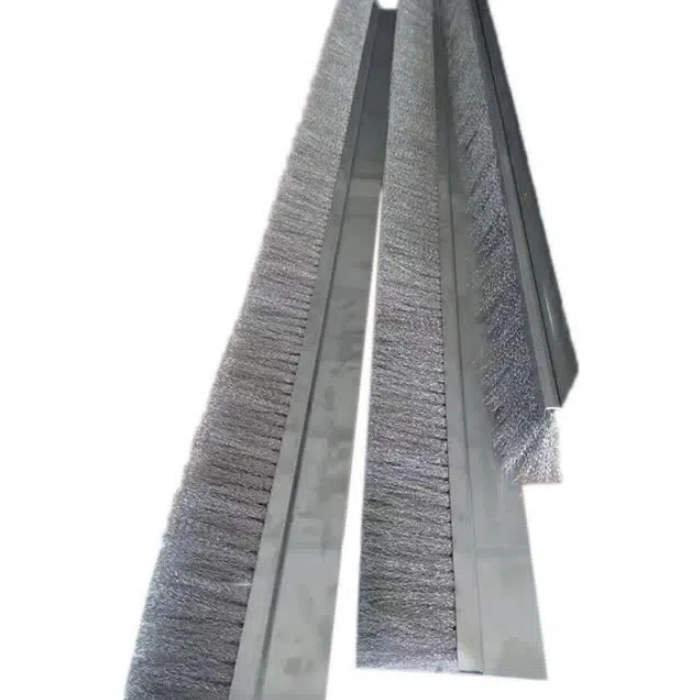
The performance of a dust-proof strip brush largely depends on its design characteristics. Selecting the right configuration ensures optimal sealing while maintaining functional flexibility.
1. Pile Density
Higher filament density improves sealing capability. Dense bristles create a thicker barrier that effectively blocks finer particles. However, excessive density may increase resistance or drag in moving applications, so the balance between tight sealing and smooth operation must be carefully managed.
2. Backing Fit and Material
The backing strip—usually made of galvanized steel, stainless steel, or aluminum—determines how securely the brush can be mounted. A precise fit ensures stability and prevents gaps that could allow dust leaks. For applications requiring corrosion resistance, stainless steel backings are often preferred.
3. Lip Seals and Dual-Layer Configurations
In demanding environments, combining a brush seal with a rubber or silicone lip further enhances dust control. The dual-layer design creates a double barrier that captures both coarse debris and fine dust particles. This hybrid setup is frequently used in food packaging, pharmaceutical processing, and automated manufacturing lines where hygiene standards are strict.
By understanding these design variables, manufacturers can tailor brush specifications to match each machine’s unique sealing requirements, ensuring maximum performance with minimal maintenance.
Installing dust-proof strip brushes is not only a preventive measure but also a measurable improvement in operational efficiency. The following key performance indicators (KPIs) help assess the benefits:
Reject Rate Reduction
One of the most direct results is a decrease in product rejects due to surface contamination or inclusion defects. By maintaining cleaner production areas, brushes reduce the need for rework and inspection, leading to consistent quality output.
Downtime and Maintenance Hours
Reduced dust accumulation means less frequent machine cleaning and maintenance. Over time, this translates into fewer shutdowns and higher operational uptime, a critical factor in high-volume manufacturing.
Cleaning and Inspection Time
Another measurable improvement is the reduction in manual cleaning time. Operators spend less effort wiping surfaces or vacuuming particles, freeing labor resources for more value-added tasks.
Tracking these metrics provides tangible proof of the return on investment from installing dust-proof strip brushes, reinforcing the importance of proactive dust control in modern production.
The versatility of industrial dust control brushes makes them valuable across many sectors that demand precision and cleanliness.
Food Packaging
In food packaging, dust from ingredients or cartons can contaminate sealed products. Dust-proof brushes installed on filling machines, conveyor frames, and sealing units prevent airborne debris from entering packaging zones, helping maintain hygiene compliance and reducing waste.
Pharmaceutical Manufacturing
In the pharmaceutical industry, even minimal contamination can lead to costly recalls or non-compliance. Brush seals are commonly fitted on cleanroom doors, bottling lines, and tablet conveyors to ensure that dust and particles are effectively contained.
Textile and Fabric Processing
Textile plants face constant lint and fiber build-up during weaving or cutting operations. Installing strip brushes at entry and exit points of machines minimizes lint spread, protecting both the fabric quality and machine components.
Electronics and PCB Assembly
In electronics manufacturing, static and dust particles can damage sensitive components. When combined with anti-static features, dust-proof brushes not only prevent contamination but also dissipate electrostatic charges, enhancing the safety and reliability of circuit assembly.
Through these examples, it’s clear that brush-based sealing systems are not limited to one niche—they are integral to quality assurance across multiple industries.
Effective dust control can be the difference between consistent quality and recurring rework. As a leading manufacturer of custom industrial brushes, Anhui Wanze Brush Industry Co., Ltd. provides durable and precisely engineered solutions for sealing, cleaning, and polishing applications. Whether you need a tailored dust exclusion brush for conveyors or a complete sealing system for machinery, our team can design brushes that fit your specifications and performance goals.
For cleaner production lines and longer-lasting equipment, contact us today to discuss your requirements or request a customized quote. Let our expertise in brush manufacturing help you achieve a dust-free, higher-quality operation — contact us now to get started.


