
 English
 Views: 0 Author: Site Editor Publish Time: 2026-03-02 Origin: Site


Many conveyor belts stay dirty because the wrong cleaning method is used. Cleaning success depends on residue, belt material, and working conditions. In this article, you will learn how to choose the right process, when to use a Conveyor Belt Cleaning Brush, and how to clean efficiently without causing damage or extra downtime.
A conveyor belt usually becomes “hard to clean” not because the cleaning team is careless, but because the cleaning method does not match the contamination, belt construction, or operating conditions. In practice, the same belt may collect dry dust in one zone, sticky carryback in another, and greasy film near transfer or processing points. When those different soils are treated as if they were the same problem, cleaning becomes slower, less effective, and more likely to leave residue behind. That is why cleaning difficulty should be viewed as a system issue involving material behavior, belt design, and process demands rather than a simple sanitation task.
Not all buildup behaves the same way on a moving belt. Fine powders may spread across the surface and settle into edges, while sticky food residue, oils, or sugary deposits tend to cling and harden over time. Dry dust can often be removed with brushing, scraping, vacuuming, or air systems, but greasy or bonded residue usually needs wet cleaning, foam, steam, or a compatible detergent to break it down first. Carryback adds another layer of difficulty because material continues to return on the belt cycle, so the surface gets re-contaminated even after a partial cleaning pass. Using one generic method for every type of residue often produces the same frustrating result: visible soil remains, cleaning takes longer, and buildup quickly returns after restart.
Residue type | Typical cleaning challenge | More suitable approach |
Dust and powders | Spread easily and collect in edges | Dry brushing, vacuuming, air cleaning |
Sticky food residue | Adheres to belt surface and joints | Scrubbing with suitable cleaner, rinse |
Grease and oils | Smear rather than lift off | Detergent or steam-based cleaning |
Carryback | Reappears during belt cycling | Scrapers plus follow-up brushing or washing |
Belt construction has a direct impact on how easily contaminants release. Smooth belts are generally faster to wipe down, but textured, patterned, or mesh surfaces trap fine particles and sticky residue more easily. Rubber belts may need gentler chemical selection, while metal or stainless-steel belts can often tolerate heavier washdown or higher heat. Even the same residue can behave differently depending on whether it sits on a flat surface, settles into grooves, or catches in seams and edges. As a result, tool choice matters: some belts respond well to gentle brushing, while others can handle more aggressive wash and steam methods without damage.
When cleaning is incomplete, the consequences extend far beyond appearance. Residue buildup can increase contamination risk, interfere with tracking, reduce grip at pulleys, and contribute to slippage or uneven wear. Over time, that can lead to more downtime, shorter belt life, and higher maintenance costs. In hygiene-sensitive environments, inadequate cleaning also raises compliance concerns because leftover soil can support microbial growth or transfer contamination to the next production run. For that reason, conveyor cleaning should be treated as a performance control measure that protects efficiency, product quality, and equipment reliability at the same time.
The most effective way to clean a conveyor belt is not to start with water, detergent, or sanitizers. It starts with matching the cleaning sequence to the actual soil on the belt and removing as much loose contamination as possible before deeper cleaning begins. Many cleaning problems become expensive because teams jump straight to washdown while dust, crumbs, powders, or carryback are still sitting on the surface, trapped at the edges, or collecting around return paths. That approach usually spreads contamination instead of removing it efficiently. A better process reduces labor, improves cleaning consistency, and lowers the risk of belt damage.
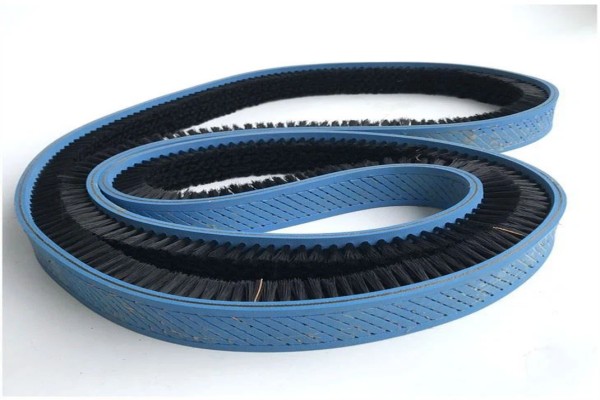
Dry pre-cleaning is the foundation of an effective conveyor belt cleaning routine. Before any liquid, foam, or chemical is applied, loose debris should be removed with the most suitable dry tools for the contamination involved. Depending on the operation, that may include scrapers for heavier carryback, brushes for surface residue, vacuums for fine dust, or air systems for lightweight dry particles. This first stage matters because it strips away the material that would otherwise turn into slurry during washdown, making the belt harder to clean and the surrounding area messier.
Dry removal also makes every later step more productive. When the belt surface is already cleared of loose debris, washing and scrubbing can target bonded residue rather than wasting time on contamination that should have been lifted earlier. In practice, this shortens cleaning time, lowers water and chemical use, and helps operators get more consistent results from one cleaning cycle to the next. It is especially useful in operations that deal with flour, powders, dry food particles, or dusty bulk materials.
Wet cleaning becomes the better option when the belt carries sticky, oily, sugary, greasy, or hygiene-sensitive residue that dry tools cannot fully remove. Water washing, foam application, and steam cleaning each have their place, but they should be selected based on what is actually left on the belt after dry pre-cleaning. Sticky product buildup often needs water or foam to loosen it, while steam can be more effective where grease removal and sanitation are both important. In hygiene-critical settings, deeper wet cleaning may also be necessary to control contamination risks that dry methods alone cannot address.
Operational details matter just as much as cleaning power. Once moisture is introduced, drainage, drying time, and recontamination control become practical concerns. Poor drainage can leave dirty runoff around the system, slow drying can delay restart, and incomplete drying can create slip or hygiene issues. That is why wet cleaning should be used when it adds real value, not as the default response to every dirty belt.
Chemical selection should be based on compatibility, not strength. A stronger cleaner may seem more effective, but if it does not match the belt material, it can shorten service life instead of improving sanitation. Rubber, PVC, polyurethane, and metal surfaces do not all tolerate the same detergents, solvents, or concentrations. Some chemicals may dry out surfaces, cause cracking, discoloration, or accelerate wear when used too aggressively or too often.
Cleaning factor | Best practice |
Loose debris present | Remove first with dry tools before wet cleaning |
Sticky or oily buildup | Use wash, foam, or steam only where needed |
Chemical choice | Match cleaner to belt material and residue type |
Rinsing | Remove all cleaner residue completely |
Drying | Ensure belt is dry before restart or sanitizing |
A reliable cleaning workflow should move in a logical order so each step supports the next rather than undoing it. The sequence below is the most effective structure for most conveyor cleaning tasks:
● shut down the system and follow lockout/tagout procedures
● remove loose debris with dry tools
● apply suitable wash, scrubbing, or chemical cleaning only as needed
● rinse thoroughly so no cleaner remains on the belt
● dry the belt completely before restart
● sanitize only when the application or hygiene standard requires it
A Conveyor Belt Cleaning Brush makes the biggest difference when the belt is not simply dirty, but difficult to clean with scraping alone. Scrapers are highly effective for removing heavier carryback and larger surface deposits, but they are less effective when residue settles into grooves, textured patterns, seams, mesh openings, or irregular belt surfaces. In those situations, fine particles and stubborn film often remain behind even after visible buildup has been removed. That is where brushing becomes a practical decision rather than an optional extra: it addresses the areas that rigid contact tools or simple washdown methods tend to miss.
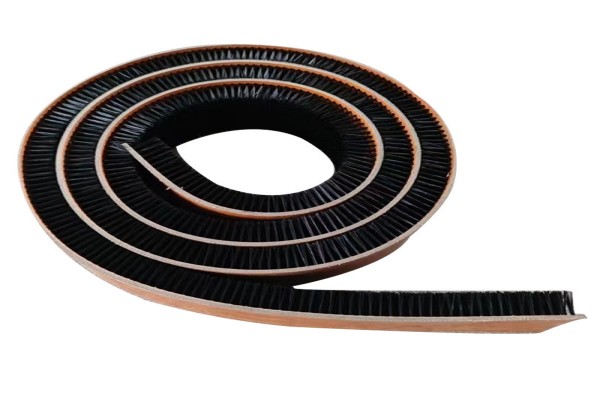
Brushing is especially useful when contamination is light but widespread, or when the belt surface itself creates places for residue to hide. Patterned and textured belts, fabric surfaces, mesh constructions, and edge zones often hold onto powders, sticky food particles, or compacted fines long after a scraper has done its job. A brush can reach into those harder-to-clean areas, loosen trapped residue, and improve the effectiveness of whatever cleaning stage comes next. For buyers comparing tools, this is usually the key decision point: if scraping removes the bulk material but still leaves visible residue in surface details, brushing is often the missing step.
The choice between manual and rotary brush cleaning depends less on preference and more on workload, cleaning frequency, and the level of consistency required. Handheld brushing works well for spot cleaning, detail work, and shutdown maintenance where operators need flexibility around edges, joints, or localized buildup. It is typically the better fit for smaller systems or applications where cleaning conditions change often. Rotary brush systems are more suitable when belts need repeated or continuous cleaning with less manual effort. They can improve speed and consistency, especially in larger operations where labor time is a major concern.
Cleaning option | Best suited for | Main advantage |
Manual brush cleaning | Spot cleaning, shutdown maintenance, smaller systems | More control in targeted areas |
Rotary brush cleaning | Repeated cleaning, larger lines, continuous routines | Faster and more consistent cleaning |
A brush improves cleaning only when it is matched correctly to the belt. Brush stiffness, contact pressure, cleaning frequency, and belt material all affect the result. A brush that is too aggressive can increase surface wear, while one that is too soft may glide over residue without removing it. The same applies to pressure: more force does not always mean better cleaning. Excessive pressure can reduce belt life and still fail to clean effectively if the brush type is wrong for the surface. The most effective setup balances cleaning strength with belt protection, especially on rubber, patterned, or more delicate surfaces that can be damaged by repeated abrasive contact.
A time-saving conveyor belt cleaning routine starts with one principle: clean according to actual operating conditions, not according to habit. Many teams still rely on fixed weekly routines, even when belt contamination changes daily with product type, throughput, moisture, and shift length. That often leads to two costly outcomes at the same time: over-cleaning belts that do not need intensive treatment and under-cleaning belts that are building up residue fast enough to affect performance. A better routine is built around what the belt carries, how quickly soil accumulates, and how much hygiene control the process requires.
Cleaning frequency should reflect real belt conditions rather than a generic calendar rule. A belt carrying sticky foods, oily products, or fine powders will usually need more frequent attention than one moving dry, low-residue material. Hygiene-sensitive lines may require cleaning every shift or every production changeover, while other operations can rely on a less frequent but still structured schedule. Operating hours matter as well: a belt running nearly continuously will accumulate contamination differently from one used only part of the day. When schedules are based on soil load, conveyed material, and production demands, cleaning becomes more targeted and downtime becomes easier to control.
Efficient cleaning routines rarely depend on a single tool. Scrapers are useful for removing bulk residue and carryback, brushes help lift fine particles from surface details, and wash or sanitation steps handle the contamination that dry methods cannot fully remove. When these methods are combined in the right order, each one reduces the burden on the next. That means faster cleaning, less repeated labor, and more consistent results across shifts. The practical goal is not to add more equipment than necessary, but to create a simple routine in which each tool solves a specific part of the cleaning problem instead of forcing one method to do everything.
Routine element | What it helps prevent |
Scrapers and dry removal | Heavy carryback and loose buildup |
Brushes | Residue trapped in textures, seams, or edges |
Wash or sanitation steps | Sticky, oily, or hygiene-sensitive contamination |
Condition-based scheduling | Unnecessary cleaning time and missed buildup |
Cleaning time is also inspection time. While the belt is exposed and residue has been removed, operators should check edges, rollers, pulleys, and return paths for early signs of wear, buildup, mistracking, or damage. These checks do not add much time to the routine, but they can prevent larger failures later. A belt that is cleaned regularly and inspected at the same time is easier to keep aligned, safer to run, and less likely to fail unexpectedly, which helps reduce repair costs and avoid unplanned stoppages.
Effective conveyor belt cleaning starts with choosing the right method for the belt and residue. Better results come from the right tools, timing, and cleaning sequence, not more effort. A well-matched Conveyor Belt Cleaning Brush can improve speed and consistency. Anhui Wanze Brush Industry Co., Ltd. provides practical brush solutions that help operations clean more efficiently and reduce downtime.
A: Use a Conveyor Belt Cleaning Brush for grooves, textured belts, mesh, and fine residue that scrapers cannot fully remove.
A: No. A Conveyor Belt Cleaning Brush works best with scrapers when carryback and surface residue both need control.
A: Shut down the system, remove dry debris first, then clean with a Conveyor Belt Cleaning Brush or wet method as needed.


