
 English
 Views: 0 Author: Site Editor Publish Time: 2026-03-11 Origin: Site


Manufacturing lines fail faster when dust, residue, and surface defects build up. Cylinder Brushes offer a practical way to improve cleaning, finishing, and material handling in continuous operations. In this article, you will learn the top 7 applications of cylinder brushes, the problems they solve, and what to consider before choosing one.
In conveyor-based production, even a small amount of leftover material can create a chain reaction of operating problems. Fine powders, loose scraps, fibrous debris, and sticky residue often remain on the belt after discharge, then circulate back into the system. Over time, this carry-back can cling to rollers, collect under the return side of the belt, and gradually interfere with belt tracking. Once buildup becomes uneven, the line may experience contamination between batches, more frequent manual cleanup, and greater wear on nearby components. In high-throughput plants, these issues are not just housekeeping concerns; they can directly affect throughput stability, sanitation standards, and maintenance planning.
Common conveyor issue | Effect on production |
Carry-back accumulation | More cleanup and higher contamination risk |
Dust and loose particles | Poor housekeeping and reduced equipment reliability |
Sticky residue on rollers | Tracking instability and uneven belt movement |
Debris buildup near return path | Extra wear on components and more maintenance stops |
Cylinder brushes help solve these problems by providing continuous contact with the moving belt surface rather than relying only on periodic manual cleaning. Installed near key discharge or return points, they remove remaining material before it hardens, spreads, or transfers to other machine parts. This supports a cleaner belt path and helps keep material flow more predictable during long production runs.
A well-matched cylinder brush can support line performance in several ways:
● reduce unplanned stoppages caused by heavy residue accumulation
● lower strain on rollers and other moving parts
● improve belt cleanliness without interrupting normal operation
● help maintain steadier conveying conditions across shifts
Because the brush works as part of the running system, it is especially useful where production lines cannot afford frequent shutdowns for cleanup. The result is a cleaner conveying process with less manual intervention and more stable day-to-day operation.
In metalworking and fabricated-part production, surface quality affects far more than appearance. After cutting, stamping, machining, or welding, parts often carry burrs, sharp edges, oxidation, or light scale that can interfere with downstream processing. Cylinder brushes are widely used at this stage because they provide continuous, even contact across flat, curved, or moving surfaces, making them suitable for deburring, edge smoothing, rust removal, and light texturing. Instead of cutting too aggressively into the workpiece, the brush can be selected to deliver a controlled brushing action that cleans and refines the surface while preserving part geometry. This is especially useful in automated lines where consistency matters as much as removal performance.
Surface issue | How cylinder brushes help |
Burrs after machining or cutting | Smooth edges and reduce sharp projections |
Light rust or oxidation | Remove loose corrosion from exposed surfaces |
Minor scale and residue | Clean parts before the next production step |
Uneven surface texture | Create a more uniform finish across the part |
Because the brush rotates continuously, it can treat large volumes of parts with repeatable pressure and coverage. This makes cylinder brushes valuable in lines processing sheet metal, tubes, profiles, and fabricated components where manual finishing would be slower and less consistent. The ability to tune filament type, density, and aggressiveness also helps manufacturers match the brush to the hardness and sensitivity of the material rather than using a one-size-fits-all finishing method.
Manufacturers also use cylinder brushes when the goal is not only to clean a surface, but to prepare it for what happens next. Paint, powder coating, adhesive bonding, plating, and assembly all perform better when the substrate is clean, evenly finished, and free of loose particles. A properly specified cylinder brush helps create that condition by producing a more uniform surface without the excessive base-material damage that can come from overly aggressive abrasion. This matters when the finished part must meet both functional and visual standards, especially in operations where appearance, coating adhesion, and dimensional control all need to stay within a tight process window.
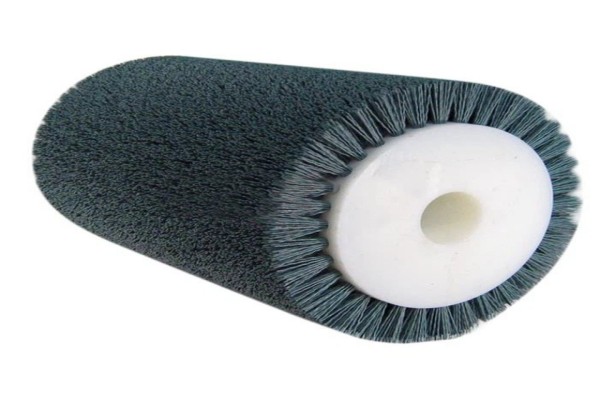
In produce processing, cleaning has to remove contamination without harming the product itself. Fruits and vegetables often arrive with soil, dust, field residue, and other surface contaminants that plain water cannot always clear efficiently. Soft-bristled cylinder brushes are widely used because they provide consistent contact across irregular shapes while remaining gentle enough for delicate skins. As produce moves through a washing line, the rotating brush action helps lift and loosen unwanted material from the surface, improving cleanliness without creating the kind of aggressive abrasion that can reduce visual quality or market value. This is especially important for processors handling mixed product sizes or surfaces that require uniform cleaning rather than spot treatment.
Processing need | Role of cylinder brushes |
Surface dirt removal | Loosen soil, dust, and residue during washing |
Gentle product handling | Clean without excessive damage to skins |
Irregular produce shapes | Maintain contact across uneven surfaces |
Cleaner presentation | Help improve visible surface quality before packing |
Cylinder brushes are also valuable when processors need both cleaning efficiency and stable line speed. In high-throughput washing systems, they help maintain a continuous cleaning action instead of relying on slower batch-style handling. For root vegetables such as potatoes and carrots, brush systems can assist with peeling by removing outer surface material while keeping the process controlled. That combination of brushing and movement supports a more streamlined operation where hygiene, throughput, and appearance all matter at the same time.
Processors often value cylinder brushes in these lines because they can help:
● support steady product flow through washing equipment
● reduce manual cleaning involvement
● improve consistency across large volumes
● balance cleaning strength with product protection
In practical terms, that makes cylinder brushes a useful fit for facilities that need produce to leave the line cleaner, more uniform in appearance, and ready for the next stage of handling.
Glass processing demands a very different brushing approach from metal or conveyor cleaning. The surface must be cleared of dust, fine particles, and residue without introducing scratches, haze, or other visible defects that reduce optical quality. Even minor surface damage can become a costly issue in later stages, especially when the glass is intended for coating, silvering, or other appearance-sensitive applications. For that reason, manufacturers rely on controlled brushing rather than aggressive abrasion. Cylinder brushes designed for glass lines typically use fine, non-scratch filaments that can sweep away contamination while maintaining a gentle contact profile across the surface.
Glass processing requirement | Why it matters |
Particle removal | Prevents defects from carrying into later stages |
Non-scratch contact | Protects surface clarity and appearance |
Even brushing action | Supports uniform cleaning across wide sheets |
Residue control | Helps maintain cleaner wash and finishing conditions |
In glass and mirror manufacturing lines, fine-filament cylinder brushes are commonly integrated into wash and finishing sections where surface quality is closely monitored. Their rotating action helps clean broad, flat sheets efficiently while keeping contact consistent from edge to edge. This is especially useful in automated production, where uneven cleaning can affect downstream coating quality or leave marks that become visible in the finished product. In these settings, the value of the brush lies not in aggressive material removal, but in precise, repeatable cleaning that fits the sensitivity of the substrate.
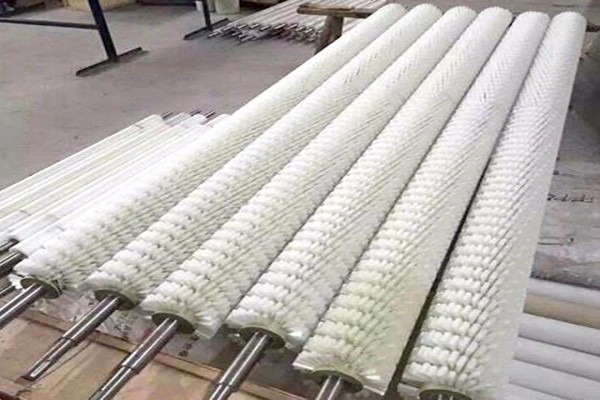
In textile processing, surface quality has a direct effect on how the finished material looks and feels. Cylinder brushes are commonly used to raise nap on fabrics, remove loose lint, and refine the surface so the textile appears cleaner and more uniform. This brushing action is especially valuable for materials that need a softer hand feel or a more controlled surface finish before further treatment. Because the brush rotates continuously, it can treat a wide area with steady contact, helping processors improve appearance without relying on inconsistent manual methods. In some lines, cylinder brushes are also used where even application or distribution of treatments across the fabric is important, making them part of both cleaning and finishing operations.
Textile treatment need | Contribution of cylinder brushes |
Raising nap | Creates a softer and fuller surface feel |
Lint removal | Improves surface cleanliness and appearance |
Surface refinement | Helps produce a more even finish |
Continuous treatment | Supports stable processing on moving fabric |
In fast-moving textile systems, even brushing contact matters because fabric is processed as a continuous web rather than as individual pieces. Uneven pressure can lead to irregular surface treatment, visible variation, or inconsistent finish quality across the material width. Fine-tuned cylinder brushes help maintain a more uniform brushing effect from one section of fabric to the next, which is critical when manufacturers need repeatable results at production speed. This consistency supports both visual quality and smoother downstream processing in high-volume textile operations.
Printing and paper converting lines operate at high speed, which makes small contaminants a much bigger problem than they first appear. Paper dust, loose fibers, and fine particles can settle on rollers, sheets, and machine surfaces, gradually affecting print quality and equipment cleanliness. At the same time, static buildup can cause sheets or webs to cling, misfeed, or attract even more airborne debris. Cylinder brushes are used in these environments because they help remove surface dust while also supporting cleaner, more controlled handling conditions. When specified for the application, they can work alongside static-management measures to reduce the operational problems that come from dust and charge accumulation.
Printing-line issue | How cylinder brushes help |
Paper dust on moving material | Sweep away loose particles before they spread |
Static-related attraction of debris | Support cleaner handling conditions |
Contamination on rollers and contact areas | Reduce buildup during continuous operation |
Inconsistent sheet or web movement | Help maintain a cleaner transport path |
Cylinder brushes also contribute to more stable paper transport through the line. In web-fed and sheet-handling systems, smooth movement is essential for registration, cleanliness, and print consistency. A brush that maintains even contact can help keep the transport path cleaner and reduce the chance that debris will interfere with rollers or guide surfaces. This matters not only for visual output, but also for overall line reliability in long production runs.
In practical terms, manufacturers use cylinder brushes in paper handling to support:
● steadier web travel through the machine
● lower contamination risk around contact points
● cleaner surfaces before downstream print or finishing steps
● more consistent operating conditions across production shifts
Solar panels operate in open environments where dust, airborne dirt, pollen, and bird droppings can gradually form a layer over the glass surface. Even when the buildup looks minor, it can reduce light transmission and make panels less effective over time. In dry, windy regions, fine dust tends to accumulate quickly; in agricultural or urban areas, mixed residue can become harder to remove if cleaning is delayed. Because these contaminants sit directly on an appearance-sensitive surface, the cleaning method must be effective without creating scratches or leaving uneven marks. Cylinder brushes are well suited to this task because they can provide broad, controlled contact across the panel face while helping lift away surface debris.
Outdoor contamination challenge | Impact on solar panel maintenance |
Dust and fine particles | Reduce surface clarity and require frequent cleaning |
Dirt mixed with moisture | Create more stubborn residue on the panel |
Bird droppings | Cause localized buildup that is harder to remove |
Large panel arrays | Increase labor and time demands for routine cleaning |
Large cylinder brushes are commonly integrated into automated solar panel cleaning systems because they can cover wide surface areas efficiently. Depending on site conditions, they may be used in dry-cleaning setups for loose dust removal or in wet-cleaning systems where water assists with tougher residue. Their rotating action allows maintenance systems to clean panels more consistently across long rows, making them especially practical where manual cleaning would be too slow, uneven, or labor-intensive.
Choosing the right cylinder brush starts with understanding what the brush must do to the surface. Not every application requires the same brushing force, and selecting a filament that is too soft or too aggressive can reduce performance. Soft filaments are typically preferred for delicate materials such as glass, produce, or sensitive finished surfaces because they remove dust and light residue with less risk of scratching or marking. More abrasive filaments are used when the goal is heavier cleaning, deburring, rust removal, or surface preparation in metalworking and fabrication. The best choice depends on how much material needs to be removed, how sensitive the substrate is, and whether the process is focused on cleaning, finishing, or controlled surface modification.
Selection factor | What to evaluate |
Surface sensitivity | Whether the material can tolerate aggressive brushing |
Cleaning objective | Dust removal, residue cleaning, deburring, or finishing |
Operating environment | Wet, dry, high-speed, high-heat, or chemical exposure |
Brush durability needs | Expected wear rate and replacement interval |
Process consistency | Need for uniform contact and repeatable results |
Operating conditions often determine whether a brush performs reliably over time. A brush used in wet processing may need water-resistant filaments, while a line exposed to chemicals or elevated temperatures requires materials that can maintain shape and performance under stress. Line speed also matters because faster-moving systems demand stable brushing contact and filaments that recover well under repeated use. In heavy-duty applications, wear resistance becomes especially important, since a brush that degrades too quickly can increase maintenance frequency and disrupt production planning. For this reason, buyers should evaluate not only the task itself, but also the actual environment in which the brush will run.
A cylinder brush should be evaluated as part of the full production process rather than as a simple replacement item. The right brush choice affects day-to-day cleaning results, but it also influences uptime, maintenance demands, replacement cost, and product consistency across long production runs. A poorly matched brush may wear out quickly, clean unevenly, or place unnecessary stress on the product or machine. By contrast, an application-matched brush supports more stable operation and can help reduce the hidden costs associated with repeated stoppages, inconsistent output, and premature brush changeouts.
Cylinder brushes solve real cleaning and processing challenges across many industries, from conveyors to solar panels. The right brush depends on the surface, application, and working conditions. Anhui Wanze Brush Industry Co., Ltd. delivers reliable cylinder brush solutions with durable performance, consistent quality, and support for different industrial needs.
A: Cylinder Brushes clean, deburr, guide, or finish moving products on automated lines.
A: Cylinder Brushes remove carry-back, dust, and residue to reduce buildup and tracking issues.
A: Cylinder Brushes can use soft filaments for glass, produce, and other scratch-sensitive materials.
A: Select Cylinder Brushes by surface type, contamination level, line speed, and operating conditions.


