
 English
 Views: 0 Author: Site Editor Publish Time: 2026-03-09 Origin: Site


What makes one cleaning tool work better than another in demanding operations? A cylindrical brush is a rotating brush with bristles around a cylindrical core for steady surface contact. In this article, you will learn where it works best, what affects its performance, and how to choose the right option for your application.
A cylindrical brush is the right choice when a process needs stable, repeated contact across a surface that is too wide, too irregular, or too fast-moving for ordinary brush formats to handle well. In many production and cleaning environments, the real problem is not simply removing dust or residue, but doing it consistently from edge to edge. Because the bristles are arranged around a rotating core, the brush keeps working across the same contact zone without the stop-and-start pattern common in manual or flat-contact methods. This makes it especially useful for conveyor cleaning, floor scrubbing, and surface preparation where uniform contact matters.
Another major advantage appears when the surface itself creates difficulty. Textured tile, grout lines, rough metal, produce skins, and moving belts all create gaps that simpler tools may skip over. A cylindrical brush can also support processes that need more than one action at the same time, such as sweeping and scrubbing, or cleaning and light finishing. This helps reduce extra handling steps in routine operations. Rather than solving a single narrow problem, it often solves a workflow problem: how to keep surfaces clean or prepared continuously without slowing the line.
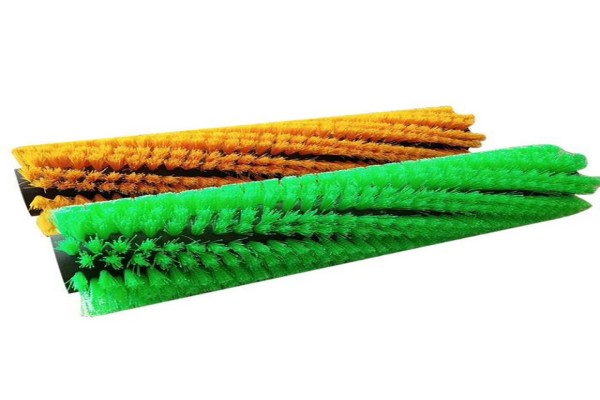
Buyers often compare cylindrical brushes with disc brushes, flat brushes, or manual cleaning tools. The decision usually comes down to contact quality, line compatibility, and labor efficiency.
Selection factor | Why a cylindrical brush is often preferred |
Surface contact | Delivers more even contact across wide working areas |
Complex surfaces | Reaches grooves, grout lines, and textured areas more effectively |
Automation fit | Integrates well with conveyors, rotary systems, and continuous processes |
Process efficiency | Can combine brushing, sweeping, scrubbing, or light finishing in one step |
Operating consistency | Supports repeatable results in high-volume tasks |
This preference is not only about performance on difficult surfaces. In repetitive operations, consistency has direct value. A brush that can stay in contact with the target area while rotating continuously is easier to integrate into automated systems and easier to standardize across shifts, product runs, or cleaning cycles.
Most buyers are looking for operational improvement, not just a different brush shape. In practice, expectations usually fall into three areas:
● Cleaner surfaces with better control of dust, debris, or residue
● Less manual rework and fewer interruptions for maintenance or repeat cleaning
● More uniform finishing, polishing, or preparation before the next production step
These expectations are realistic when the brush is matched correctly to the task, surface condition, and operating environment. A cylindrical brush is most valuable when the process requires continuous action, reliable coverage, and a solution that can keep pace with production instead of slowing it down.
Cylindrical brush applications create the most value in production settings where cleaning or surface contact must happen continuously without interrupting throughput. Conveyor systems are a clear example. Dust, loose particles, fibers, scraps, or product residue can build up quickly on belts and rollers, affecting cleanliness, traction, and downstream quality. A cylindrical brush works well here because it rotates in steady contact with the moving surface, helping remove debris while keeping the line in motion. In many automated environments, this matters more than raw brushing force. The goal is not just to clean, but to clean at production speed with predictable results.
They also add value when parts need controlled movement or positioning. In automated lines, brushes may help guide, separate, stabilize, or lightly contact components without the harsher effect of rigid mechanical handling. This is useful when products vary slightly in shape or need gentle but consistent contact during transfer. In other cases, the brush prepares surfaces before the next stage of production, such as coating, printing, bonding, or labeling. If dust, oxidation, or fine residue remains on the surface, later steps may become less reliable. A cylindrical brush can be integrated into the process so preparation happens as part of the line rather than as a separate manual task.
Cylindrical brushes are also valuable when the job goes beyond cleaning and enters material treatment. In metalworking, they are often selected for deburring because they can smooth edges, remove loose material, and improve part consistency without requiring a full abrasive process on every surface. This is especially important when parts move in volume and need repeatable preparation before assembly, coating, or inspection. On wood or metal surfaces, cylindrical brushes can also be used for polishing, texturing, or creating a more controlled finish. The exact result depends on filament type, brush density, trim length, and operating speed, but the value comes from combining contact consistency with process efficiency.
Another strong use case is residue removal before the next step in production. Paint flakes, rust, oxidation, powder, adhesive traces, or processing residue can interfere with coating quality or surface uniformity. A cylindrical brush helps restore a cleaner working surface while remaining easier to integrate into a rotary or automated system than many manual finishing methods. This makes it practical not only for heavy industrial lines but also for workshops and mid-scale manufacturing environments that need repeatable preparation without adding excessive labor.
Application area | Where the value comes from |
Conveyor cleaning | Removes debris while the line keeps moving |
Automated part handling | Supports controlled contact, guiding, or separation |
Surface preparation | Improves readiness for coating, labeling, or bonding |
Metal deburring | Smooths edges and removes loose material efficiently |
Wood or metal finishing | Enables polishing, texturing, or finish refinement |
Residue removal | Clears rust, paint, or contamination before the next process |
Commercial floor cleaning | Reaches grout lines and uneven surfaces more effectively |
Food and hygiene tasks | Provides gentle but consistent cleaning in sensitive environments |
Outside manufacturing, cylindrical brush applications deliver strong value in commercial and specialty cleaning because they perform well on surfaces that are difficult to clean evenly. Floor scrubbers using cylindrical brushes are often chosen for textured flooring, tile joints, grout lines, and uneven surfaces where pads or flatter cleaning tools may glide over recessed areas. Because the contact is concentrated and continuous, the brush can scrub into irregular surface patterns more effectively, which is why this design is often preferred in facilities that need both appearance and hygiene control.
In food and produce washing, the value comes from combining gentle handling with effective cleaning action. The brush can remove dirt or residue from fruits, vegetables, and other sensitive items without the same level of impact that harder contact systems might create. In laboratories and hygiene-sensitive environments, smaller cylindrical brushes are useful for cleaning narrow or hard-to-reach surfaces where precision matters. These settings often require a balance between cleaning power, material compatibility, and process control, and that is exactly where cylindrical brush applications tend to stand out.
The first factor that shapes cylindrical brush performance is bristle material. Even when two brushes have a similar size and shape, they can behave very differently once they contact the surface. Material choice affects flexibility, abrasion level, moisture resistance, chemical tolerance, heat performance, and the kind of finish the brush leaves behind. In practical use, that means the wrong filament can shorten brush life, damage the substrate, or fail to remove the required debris.
Bristle material | Best suited for | Performance effect |
Nylon | General industrial cleaning and finishing | Durable, flexible, and suitable for a wide range of surfaces |
Polypropylene | Wet, chemical-exposed, or washdown settings | Resists moisture and many chemicals while keeping working shape |
Steel / stainless steel / brass | Deburring, aggressive scrubbing, metal-related applications | Provides stronger cutting or cleaning action for harder tasks |
Natural fibers | Polishing, dusting, delicate surfaces | Offers softer contact and lower risk of surface marking |
Because the material directly shapes the brush-to-surface interaction, it should always be selected in relation to the real working conditions rather than the product name alone. A buyer choosing for food processing, for example, may prioritize moisture and hygiene performance, while a metal fabricator may care more about edge cleaning or controlled abrasion.
Performance is also influenced by the physical design of the brush. Diameter and overall length affect the contact zone and how the brush fits into a machine or production line. Core construction matters because it influences rigidity, weight, rotational stability, and long-term durability. A brush built for high-speed automated use must maintain balance and structural reliability, while one designed for lighter cleaning may place more emphasis on flexibility and cost efficiency.
Several smaller design variables have an equally important effect on results:
● Bristle stiffness changes how aggressively the brush acts on the surface
● Trim length affects flexibility and the ability to reach irregular areas
● Fill density influences contact consistency, debris removal, and finish uniformity
These details shape contact pressure in real use. Shorter, denser, stiffer fills usually create a more forceful brushing action, while longer or softer fills support gentler treatment. As a result, the same cylindrical brush format can be tuned either for scrubbing and residue removal or for polishing and light surface conditioning.
Construction style also changes how a cylindrical brush performs. Tufted cylindrical brushes are often chosen when the application requires dense fill placement, precise coverage, or a more application-specific brushing pattern. They work well when the process depends on controlled brushing action rather than simple sweeping.
Spiral-wound designs are often preferred when continuous contact and material movement matter. Their wrapped structure can support smooth debris flow, broad surface coverage, and efficient operation in rotating systems. Pattern arrangement also matters. Straight rows, staggered layouts, and spiral patterns each influence how the brush contacts the surface, releases debris, and balances aggressiveness against finish quality. In practice, application fit depends not on one feature alone, but on how material, dimensions, density, and construction work together under real operating conditions.
Choosing the right cylindrical brush starts with the process, not the product catalog. Buyers often make better decisions when they first define what the brush must actually do in operation: cleaning loose debris, scrubbing a contaminated surface, polishing for appearance, deburring sharp edges, conveying products, or washing sensitive items. Each goal changes the ideal brush setup. A brush designed for conveyor cleaning, for example, may need steady contact and debris removal across a moving surface, while a brush used for deburring may require a more controlled and abrasive action.
The next step is to define the operating environment in practical terms. Surface type matters because hard metal, textured tile, produce skins, glass, and coated components all respond differently to contact. Buyers should also consider line speed, moisture exposure, temperature range, and the presence of chemicals or washdown conditions. A brush that performs well in a dry finishing line may wear faster or lose efficiency in a wet, chemical-exposed environment. Good selection depends on understanding the actual working conditions rather than assuming one cylindrical brush suits every machine or substrate.
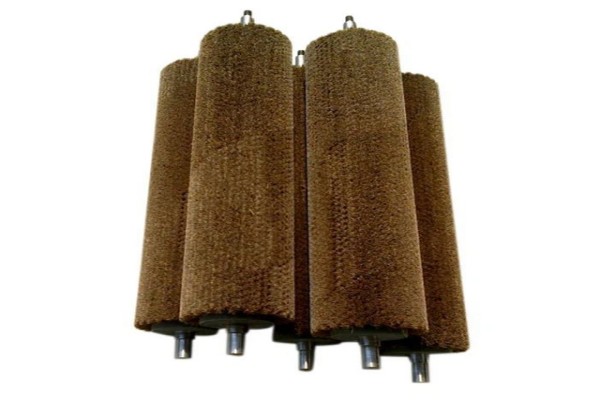
Once the application is clear, selection becomes easier because the most important buying factors can be compared against real process needs instead of general product claims.
Buying factor | Why it matters in selection |
Filament material | Determines abrasion level, flexibility, moisture resistance, and surface compatibility |
Brush size and dimensions | Affects contact area, machine fit, and coverage across the target surface |
Mounting method and compatibility | Ensures the brush works correctly with shafts, hubs, bores, and machine setup |
Wear life and maintenance | Influences replacement intervals, downtime, and long-term operating cost |
These factors should be reviewed together, not one at a time. A brush with the right filament but the wrong mounting setup can still perform poorly, and a lower-cost brush may become more expensive over time if it wears quickly or requires frequent replacement.
Several common mistakes can reduce cylindrical brush performance even when the brush appears suitable at first glance:
● Choosing based mainly on upfront price instead of service life and process fit
● Using overly aggressive bristles on surfaces that require controlled or gentle contact
● Overlooking moisture, heat, chemicals, or hygiene requirements in the working environment
Another frequent issue is ignoring finish quality. Some applications do not just need a surface cleaned; they need it left in a specific condition for coating, polishing, labeling, or further processing. When that requirement is missed, the brush may remove debris but still fail the process.
A custom cylindrical brush becomes the better choice when standard options cannot match the machine, speed, or result required. This often happens with non-standard equipment dimensions, high-speed systems, heavy wear conditions, or applications that demand tighter process control. Buyers in food processing, automated manufacturing, and precision finishing may also need closer control over hygiene, consistency, or surface outcome. In those cases, custom specifications for core material, fill pattern, filament type, density, and mounting method can improve both performance and operating life.
A cylindrical brush is a practical solution for operations that need efficient, continuous, and repeatable surface contact. The right choice depends on the task, environment, material, and performance goals. Anhui Wanze Brush Industry Co., Ltd. delivers reliable cylindrical brush solutions with durable performance, flexible customization, and strong service, helping buyers improve efficiency and achieve long-term value.
A: A cylindrical brush is a rotating brush with bristles around a core for continuous surface contact.
A: A cylindrical brush is used in conveyor cleaning, deburring, floor scrubbing, and produce washing.
A: Select a cylindrical brush by matching material, size, fill density, and speed to the process.
A: Cylindrical brush materials vary by task: nylon for general use, polypropylene for wet conditions, and wire for aggressive cleaning.


