
 English
 Views: 0 Author: Site Editor Publish Time: 2026-03-04 Origin: Site


Industrial work depends on more than machines alone. Industrial brushes often help keep lines clean, improve surface quality, guide products, and protect equipment. In this article, you will learn what industrial brushes are, where they add value, how to match them to a job, and what buyers should consider before ordering.
Industrial brushes are not ordinary brushes scaled up for factory use. They are engineered components built to perform specific tasks inside production, processing, and maintenance environments. In practice, that means the brush is designed around the job itself: removing debris from machinery, refining a surface after machining, smoothing sharp edges left by cutting, sealing gaps against dust, or guiding products through a controlled path on a line. Their value comes from precision and repeatability, not from simple scrubbing power alone.
What makes them different is the way form follows function. Brush shape, filament material, stiffness, density, and mounting method are all chosen to support a process requirement. A brush used for deburring metal parts must behave very differently from one used to clean food conveyors or protect equipment openings from contamination. Because of that, industrial brushes often become part of the production system itself rather than a separate accessory. In many operations, they help maintain product quality, reduce damage, and keep equipment performing consistently over time.
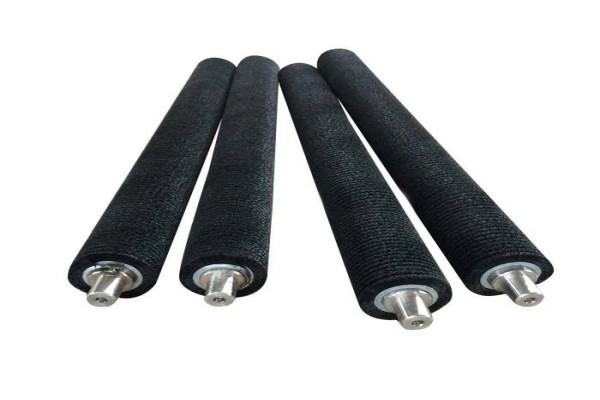
Industrial brushes appear across many industries because a single product category can be adapted to solve very different operational problems. A change in brush construction can shift its role from surface finishing to sanitation, from product handling to shielding, or from aggressive cleaning to delicate contact. This flexibility explains why the same broad category is used in metalworking, automotive production, electronics, pharmaceutical handling, and food processing.
Process need | How industrial brushes add value |
Surface treatment | Help remove burrs, rust, scale, or unwanted residue |
Cleaning and sanitation | Clear debris, grease, and buildup from equipment or lines |
Product handling | Guide, separate, position, or move items through machinery |
Sealing and protection | Block dust, reduce contamination, or shield openings |
Precision finishing | Support polishing, conditioning, or controlled contact with surfaces |
This broad usefulness does not come from one universal design. It comes from the fact that industrial brushes can be configured to match different surfaces, environments, speeds, and tolerances. That adaptability is exactly why they remain a practical tool in both heavy-duty operations and highly controlled production settings.
One of the clearest ways industrial brushes create value is through controlled, repeatable cleaning inside production environments. They are used to remove dust, loose particles, grease, metal fines, product residue, and other contaminants from machinery, conveyors, tubes, rollers, and working surfaces. Unlike generic cleaning tools, industrial brushes are often integrated into the process itself, either mounted on equipment or positioned at precise points where buildup would otherwise affect throughput, cleanliness, or product handling. In continuous operations, that matters because even a small layer of residue can interfere with movement, damage components, or reduce line efficiency over time.
Their role becomes even more important in environments where hygiene and process consistency are tightly controlled. Food production lines, pharmaceutical handling systems, and medical or electronics-related operations all depend on reliable cleaning to reduce contamination risk and maintain stable output. In these settings, brush performance is not only about visible cleanliness. It also supports compliance, product quality, and operational consistency by helping keep sensitive surfaces and equipment clear of material that could compromise the next production stage.
Area of use | Main purpose of the brush | Operational value |
Conveyors and production lines | Remove residue, debris, and buildup during operation | Maintains flow and reduces contamination risk |
Machinery and components | Clean grease, dust, and particles from working parts | Supports equipment reliability and uptime |
Tubes, holes, and narrow passages | Reach internal surfaces that are difficult to clean manually | Improves cleanliness in confined spaces |
Hygiene-sensitive processing zones | Clear product remnants and surface contamination | Helps protect consistency and sanitation |
Industrial brushes also make a major difference after cutting, machining, welding, or fabrication, when surface condition directly affects part quality. In these situations, brushes are used for deburring edges, removing rust, cleaning weld areas, polishing surfaces, and preparing materials before coating, painting, or further finishing. This is a critical step because the condition of a surface often determines how well a later process performs, whether that means coating adhesion, part fit, appearance, or handling safety.
That is why industrial brushes should not be viewed only as maintenance tools. In many plants, they function as part of quality control. A properly selected brush can help produce smoother edges, cleaner weld zones, and more uniform surfaces without introducing excessive damage to the workpiece. For manufacturers, that means brushes contribute to both visual finish and functional performance. A part that has been correctly deburred or conditioned is easier to assemble, safer to handle, and less likely to create downstream defects.
Key surface-related uses include:
● deburring sharp edges after cutting or drilling
● removing rust, oxidation, or scale from metal surfaces
● cleaning weld seams before or after joining operations
● polishing or refining part surfaces for appearance and function
● preparing substrates before coating, painting, or sealing
Another major advantage of industrial brushes is that they can actively support movement and control inside machinery. In automated systems, brushes may guide products into position, separate items on a line, meter delicate components, or help maintain controlled contact during transport. This is especially useful where parts need to move smoothly without scratching, jamming, or losing alignment. In some applications, brushes are also used to manage static or reduce unwanted contact between products and equipment surfaces.
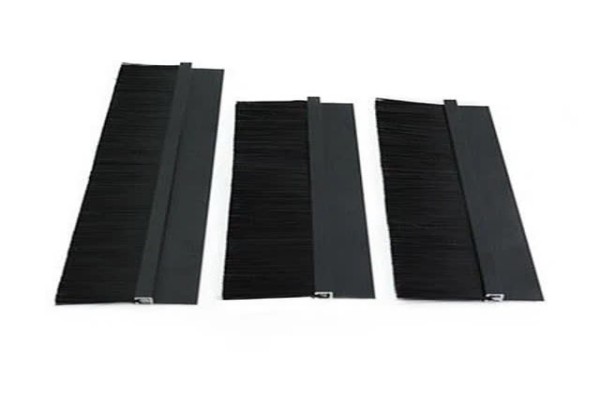
Brushes also serve as sealing and protective elements. Strip-style designs can close gaps, block dust entry, reduce contamination, and shield internal machine areas from debris while still allowing movement through an opening. This makes them more than cleaning accessories; they become functional machine components that support process stability, protect equipment, and improve control within the system itself.
The most effective way to choose an industrial brush is to begin with the task, not with the brush category. Before comparing shapes or materials, the buyer needs to define what the brush must actually do inside the process. Is the goal to remove dust and residue, deburr a metal edge, polish a surface, seal a gap, guide products on a line, or clean inside a tube or drilled hole? That first question matters because industrial brushes are engineered around function. A brush that performs well in conveyor cleaning may fail quickly in weld cleaning, while a brush built for aggressive deburring could damage a surface that only needs light finishing.
Starting with the application also helps narrow the real operating conditions. Surface material, production speed, pressure, temperature, exposure to chemicals, moisture, and the geometry of the work area all affect brush performance. If those conditions are not clear at the start, it becomes easy to select a brush based only on appearance or price, which often leads to uneven results, short service life, or unnecessary wear on the equipment and the part itself. In industrial use, brush selection is less about finding a general-purpose tool and more about matching a working component to a defined process requirement.
A practical way to frame the decision is to ask:
● What exactly must the brush accomplish?
● What surface or product will it contact?
● How aggressive or gentle should the brushing action be?
● Will the brush work in a wet, hot, dusty, or chemically exposed environment?
● Does the application require broad coverage, targeted pressure, sealing, or internal access?
Once the application is clear, the next step is to match the brush style to the mechanical demands of the job. Brush shape affects contact pattern, reach, pressure distribution, and how the brush behaves during continuous use. Roller and cylinder brushes are commonly used where broad surfaces or moving lines require steady, repeated contact. They are well suited to conveyor cleaning, washing, sorting, and other operations where consistency across a wider area matters.
Wheel and cup brushes fit a very different kind of work. These designs are better for aggressive surface treatment such as deburring, rust removal, weld cleaning, and focused edge conditioning. They concentrate contact in a way that supports more forceful brushing action, which is useful when the task involves removing burrs, oxidation, or heavy contamination. For buyers evaluating finishing applications, that makes style selection just as important as material selection.
Strip brushes and twisted-in-wire brushes solve another set of problems. Strip brushes are often selected for sealing, shielding, dust blocking, and guiding products through equipment openings. Twisted-in-wire brushes are more suitable for tubes, holes, channels, and other narrow or hard-to-reach spaces where a wider brush simply cannot function effectively. The right style is therefore determined by how the brush must contact the work, not only by the general industry where it will be used.
Brush style | Best suited for | Why it fits |
Roller / cylinder brushes | Broad surfaces, conveyor lines, continuous cleaning or finishing | Provide even contact over a larger working area |
Wheel / cup brushes | Deburring, rust removal, weld cleaning, aggressive surface work | Deliver more focused brushing action |
Strip brushes | Sealing gaps, dust blocking, guiding, shielding | Work well as fixed functional components in equipment |
Twisted-in-wire brushes | Tubes, holes, narrow passages, internal cleaning | Reach confined spaces with controlled contact |
After application and brush style, filament material becomes the key performance decision. Buyers usually care less about material names alone than about what those materials mean in actual use: stiffness, abrasion level, chemical resistance, durability, and whether the target surface is delicate or demanding. Nylon is widely used because it offers good wear resistance and flexibility, making it suitable for many cleaning and finishing tasks. Polypropylene is often preferred where chemical resistance and moisture exposure matter, especially in wet or washdown environments.
Wire materials are selected when stronger action is needed. Steel supports heavier deburring and rust removal, while stainless steel adds corrosion resistance and suits environments where contamination control or moisture exposure is important. Brass is softer and more appropriate when the surface is more scratch-sensitive or when conductivity matters. Natural fibers are generally chosen for gentler contact and polishing-related uses, while abrasive nylon combines synthetic flexibility with embedded abrasive action for tougher finishing work.
Material choice should always reflect the real conditions of use. A brush that is durable in dry metal finishing may not be the best option for chemical exposure, and an aggressive filament may shorten part life if the surface is delicate. That is why the most reliable selection logic is to connect filament behavior directly to the job environment and the finish requirement, rather than treating all industrial brush materials as interchangeable.
Not every application requires a custom solution. In many routine operations, a standard industrial brush can perform well if the task, equipment layout, and working conditions are relatively straightforward. Common cleaning, light surface treatment, or general conveyor-contact jobs may be served by standard sizes and configurations, especially when the brush does not need to fit an unusual machine space or interact with delicate parts. In these cases, using a standard option can simplify sourcing and reduce lead time without sacrificing useful performance.
The decision changes when the process has tighter demands. A custom brush is often necessary when equipment dimensions are non-standard, when part geometry creates hard-to-reach contact points, or when hygiene, static control, or high-speed production places stricter requirements on the brush. The same is true when a brush must do more than one job at once, such as guiding products while also limiting dust entry. Buyers should therefore think in terms of fit for purpose rather than assuming that standard is always sufficient or that custom is always better. The right question is whether the brush design truly matches the process it will support.
Buying situation | Standard brush may be enough | Custom brush is often better |
Equipment fit | Common machine layouts and accessible contact areas | Unusual mounting, tight tolerances, or restricted spaces |
Process demands | General cleaning or light-duty work | High-speed, precision, hygiene-sensitive, or multi-function processes |
Part characteristics | Simple, durable surfaces | Complex geometry, delicate parts, or controlled handling needs |
Performance expectations | Acceptable variation in wear or contact | Need for consistent, process-specific results |
Price matters, but it should never be the only buying factor. A lower-cost brush may appear attractive at first, yet it can become more expensive over time if it wears out quickly, requires frequent replacement, or performs inconsistently in the application. Industrial brushes affect more than maintenance budgets; they can influence downtime, cleaning intervals, labor demands, and even the quality of the finished product. In production settings, that broader cost picture is usually more important than the initial purchase price alone.
When comparing options, buyers should look at the full operating impact:
● expected service life under actual working conditions
● replacement frequency and inventory burden
● maintenance effort needed to keep the brush effective
● risk of stoppages caused by poor fit or rapid wear
● influence on cleanliness, finish quality, or process consistency
A brush that lasts longer, performs more consistently, and protects product quality often delivers better value even if its upfront cost is higher. In industrial buying, the stronger decision is usually the one that reduces operational friction over time rather than the one with the lowest initial number on the quote.
Industrial brushes are specialized tools that improve cleaning, finishing, sealing, and product handling in real production work. The right choice depends on the application, environment, and performance needs. Anhui Wanze Brush Industry Co., Ltd. delivers reliable brush solutions with durable materials, flexible customization, and practical service that help customers improve efficiency and product quality.
A: Industrial brushes are used for cleaning, deburring, finishing, sealing, and product guiding in industrial processes.
A: Choose industrial brushes by matching the task, surface material, environment, and required brush aggressiveness.
A: Industrial brushes commonly use nylon, polypropylene, steel, stainless steel, brass, or abrasive-filled filaments.
A: No. Industrial brushes also support surface finishing, static control, sealing, and automated material handling.


